
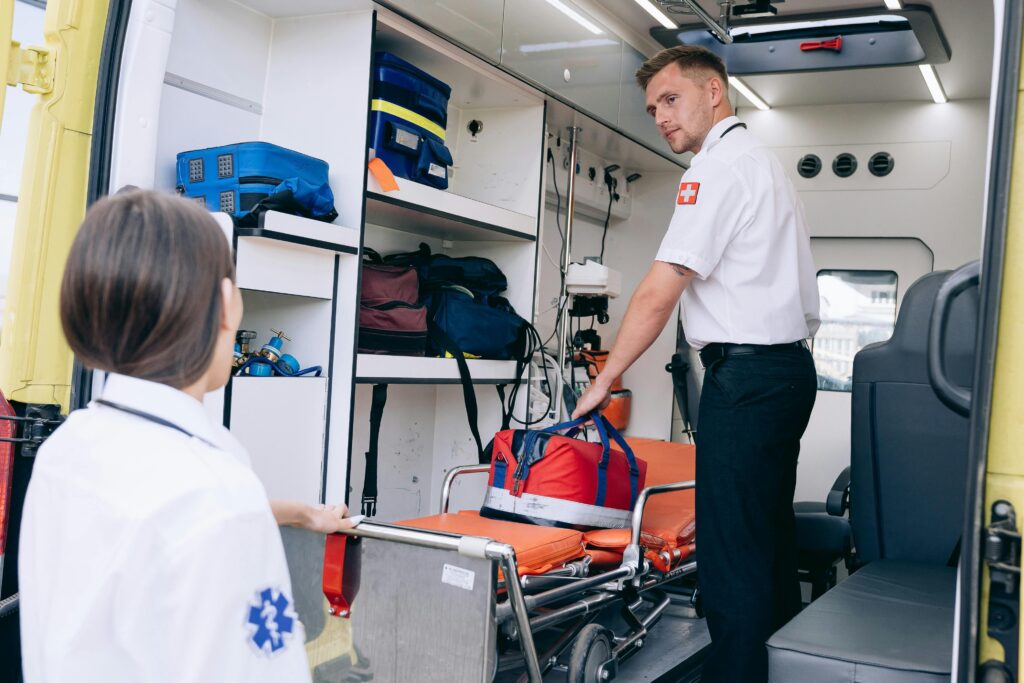
EMTs and paramedics work side by side on the same ambulance, but they don’t do the same job, and they aren’t paid the same. Paramedics earn about $16,000 more a year at the national median, and in some states the gap is more than $30,000. The catch is a much longer training path. This EMT vs. paramedic comparison covers the duties, training, exams and pay, including the difference in every state.
EMT vs. paramedic at a glance
| EMT | Paramedic | |
|---|---|---|
| What they do | Assess patients, give oxygen and some medications, control bleeding, splint injuries, transport patients | Everything an EMT does, plus advanced care: more medications, advanced airway management and reading EKGs |
| Typical training | Usually less than a year; courses are often a few months | A longer program after EMT; often a certificate or associate degree, and some universities offer bachelor’s degrees |
| Prior experience | None required | EMT certification first, and paramedic programs typically expect EMT work experience |
| National exam | NREMT cognitive exam (70–120 items, 2 hours, $104) plus a skills exam | NREMT Paramedic exam ($175), scenario-based, with no separate skills exam since July 2024 |
| Median pay (May 2025) | $44,470 | $60,600 |
| Jobs (2025) | About 181,900 | About 102,200 |
What the difference looks like on the job
According to the BLS, EMTs care for patients at the scene and on the way to the hospital, handling breathing problems, cardiac emergencies and trauma. Advanced EMTs, a middle level, can also give intravenous fluids and some medications.
Paramedics “provide more extensive prehospital care,” in the BLS’s words. They can give a wider range of medications, manage a patient’s airway with advanced techniques and interpret EKGs, so they often lead the care on serious calls. In many systems, an ambulance is staffed with one EMT and one paramedic.
The training path
Becoming a paramedic is a two-step process. First you complete an EMT course, pass the National Registry exam and get your state license. Most people then work as an EMT before starting a paramedic program.
The National Registry’s baseline for paramedic certification is graduation from a paramedic program accredited by CAAHEP (the Commission on Accreditation of Allied Health Education Programs). The BLS notes that most community college paramedic programs lead to a nondegree award or an associate degree. After the program, you have two years from completing the course to pass the National Registry Paramedic exam, and then you apply for your state license.
For the first step, our guide on how to become an EMT covers the course, the exam and state licensing in detail.
Paramedic vs. EMT pay in every state
We compared the BLS May 2025 median for both jobs in every state. Paramedics out-earn EMTs everywhere, but the size of the gap varies a lot. These are the states where becoming a paramedic adds the most:
| State | EMT median | Paramedic median | Difference |
|---|---|---|---|
| Washington | $52,690 | $104,310 | +$51,620 |
| New Jersey | $53,610 | $86,630 | +$33,020 |
| District of Columbia | $46,650 | $78,550 | +$31,900 |
| California | $46,380 | $74,590 | +$28,210 |
| Minnesota | $48,090 | $76,300 | +$28,210 |
| Connecticut | $50,640 | $77,480 | +$26,840 |
| Utah | $38,930 | $65,420 | +$26,490 |
| Oregon | $49,270 | $74,840 | +$25,570 |
| New York | $48,400 | $73,200 | +$24,800 |
| North Dakota | $39,670 | $62,320 | +$22,650 |
Washington stands out: its paramedics earn a median of $104,310, about twice the EMT median there. Across all states, the typical gap is about $17,400, or roughly 40%. The smallest gaps are in states such as Alabama and Ohio, where paramedics still earn about $11,000 more.
Our take: is becoming a paramedic worth it?
- Start as an EMT either way. It’s the required first step, it’s quick, and it tells you whether you like emergency work before you commit to a longer program.
- The raise usually pays back the training. An extra $16,000 or so a year at the national median means a paramedic program can pay for itself within a few years, especially if your employer helps with tuition.
- Check your state’s gap first. In Washington, New Jersey or California the jump is $28,000 or more; in a few states it’s closer to $11,000. Use the table below.
- Think about the role, not just the pay. Paramedics carry more responsibility on critical calls. If you’d rather move toward nursing or another healthcare role, EMT experience is valuable for that too.
Full table: EMT and paramedic pay by state
| State | EMT median | Paramedic median | Difference |
|---|---|---|---|
| Alabama | $37,810 | $48,540 | +$10,730 |
| Alaska | $57,440 | $71,860 | +$14,420 |
| Arizona | $39,500 | $58,600 | +$19,100 |
| Arkansas | $36,230 | $50,310 | +$14,080 |
| California | $46,380 | $74,590 | +$28,210 |
| Colorado | $45,750 | $63,910 | +$18,160 |
| Connecticut | $50,640 | $77,480 | +$26,840 |
| Delaware | $46,790 | $64,240 | +$17,450 |
| District of Columbia | $46,650 | $78,550 | +$31,900 |
| Florida | $39,870 | $60,140 | +$20,270 |
| Georgia | $45,550 | $57,660 | +$12,110 |
| Hawaii | $66,410 | $81,280 | +$14,870 |
| Idaho | $38,840 | $60,380 | +$21,540 |
| Illinois | $42,260 | $60,660 | +$18,400 |
| Indiana | $42,740 | $60,320 | +$17,580 |
| Iowa | $40,660 | $60,590 | +$19,930 |
| Kansas | $35,780 | $51,020 | +$15,240 |
| Kentucky | $36,800 | $49,890 | +$13,090 |
| Louisiana | $35,870 | $56,050 | +$20,180 |
| Maine | $46,340 | $63,050 | +$16,710 |
| Maryland | $48,100 | $66,660 | +$18,560 |
| Massachusetts | $50,230 | $66,340 | +$16,110 |
| Michigan | $39,870 | $52,080 | +$12,210 |
| Minnesota | $48,090 | $76,300 | +$28,210 |
| Mississippi | $36,630 | $54,630 | +$18,000 |
| Missouri | $42,160 | $59,180 | +$17,020 |
| Montana | $36,140 | $50,890 | +$14,750 |
| Nebraska | $41,710 | $56,230 | +$14,520 |
| Nevada | $37,560 | $59,280 | +$21,720 |
| New Hampshire | $46,790 | $64,210 | +$17,420 |
| New Jersey | $53,610 | $86,630 | +$33,020 |
| New Mexico | $37,550 | $55,530 | +$17,980 |
| New York | $48,400 | $73,200 | +$24,800 |
| North Carolina | $44,250 | $57,320 | +$13,070 |
| North Dakota | $39,670 | $62,320 | +$22,650 |
| Ohio | $40,220 | $51,300 | +$11,080 |
| Oklahoma | $34,170 | $46,790 | +$12,620 |
| Oregon | $49,270 | $74,840 | +$25,570 |
| Pennsylvania | $43,310 | $61,000 | +$17,690 |
| Rhode Island | $51,290 | $63,550 | +$12,260 |
| South Carolina | $40,370 | $53,550 | +$13,180 |
| South Dakota | $36,800 | $48,830 | +$12,030 |
| Tennessee | $40,330 | $57,690 | +$17,360 |
| Texas | $37,260 | $57,500 | +$20,240 |
| Utah | $38,930 | $65,420 | +$26,490 |
| Vermont | $45,600 | $60,360 | +$14,760 |
| Virginia | $45,420 | $60,480 | +$15,060 |
| Washington | $52,690 | $104,310 | +$51,620 |
| West Virginia | $34,360 | $48,460 | +$14,100 |
| Wisconsin | $43,060 | $59,710 | +$16,650 |
| Wyoming | $47,070 | $64,040 | +$16,970 |
Frequently asked questions
How much more do paramedics make than EMTs?
Nationally, paramedics earned a median of $60,600 in May 2025, compared with $44,470 for EMTs, a difference of about $16,000 a year.
Can you become a paramedic without being an EMT?
Generally no. Paramedic programs expect you to hold EMT certification first, and the BLS notes that paramedics typically need prior EMT work experience.
Is the paramedic exam harder than the EMT exam?
It covers much more advanced material. Since July 2024, the National Registry Paramedic exam is a single scenario-based exam, with a large share focused on clinical judgment. It costs $175, compared with $104 for the EMT exam.
Do EMTs and paramedics need a state license?
Yes. The BLS says all states require EMTs and paramedics to be licensed in the state where they work, and requirements vary by state.
Written by Jan Llaona, TradePath Guide. We research every guide using official sources such as the Bureau of Labor Statistics, state licensing boards and certifying organizations, and update it when the numbers change. Read our editorial policy.
Last updated October 21, 2026. Sources: BLS Occupational Outlook Handbook, EMTs and Paramedics; BLS OEWS May 2025 state data; National Registry of EMTs. Requirements vary by state.