
The typical phlebotomist in the United States earned $45,230 a year in May 2025, or about $21.75 an hour, according to the Bureau of Labor Statistics (BLS). But that median hides a gap of more than $20,000 between the lowest- and highest-paid workers in the field. This guide looks at what actually drives a phlebotomist salary up or down, using official wage data, and what you can do about each factor.
The range: from about $36,000 to almost $59,000
The BLS reports that the lowest-paid 10% of phlebotomists earned less than $35,780, while the highest-paid 10% earned more than $58,780. New phlebotomists usually start toward the bottom of that range. Where you end up depends mostly on four things: the state you work in, the type of employer, the hours you’re willing to work and the skills you add over time. Certification matters too, though in a less direct way than many training ads suggest.
Factor 1: Your state
Location has the biggest effect on pay. In May 2025, the median phlebotomist in California earned about $20,000 a year more than the median phlebotomist in Louisiana, for essentially the same job.
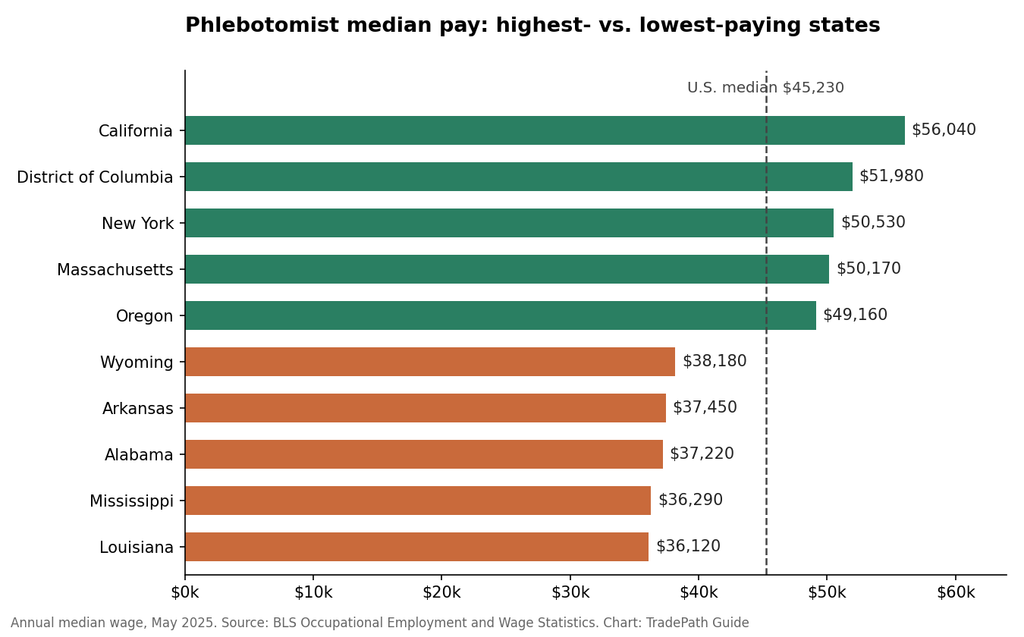
The pattern is familiar: the West Coast and the Northeast pay the most, and much of the South pays the least. Two cautions before you plan a move, though:
- Living costs follow the same map. Rent in coastal California or New York can eat most of the extra pay. The Bureau of Economic Analysis publishes regional price parities that show how expensive each state is compared with the national average.
- Some high-paying states have stricter rules. California is one of a few states that require phlebotomists to hold a state certificate, which means extra training and paperwork before you can work there.
Pay also varies within a state. Big metro areas generally pay more than rural areas, so compare the specific city you’d live in. The Department of Labor’s CareerOneStop salary finder shows local wages for phlebotomists by state and metro area.
Factor 2: Who you work for
Hospitals employ the most phlebotomists, but they aren’t the best-paying option on average. According to the BLS, outpatient care centers paid a median of $48,030 in May 2025 and medical and diagnostic laboratories paid $46,670, compared with $44,220 in hospitals. At the bottom of the list, “all other ambulatory healthcare services,” which includes many blood and organ banks, paid a median of $39,930.
That said, the difference between a lab and a hospital is a few thousand dollars, smaller than the gap between states. Benefits, schedule and tuition assistance can be worth more than the base wage, especially if you plan to keep studying. Our guide on how to become a phlebotomist describes what the work is like in each setting.
Factor 3: Your shifts
The BLS notes that phlebotomists in hospitals and labs may need to work nights, weekends and holidays. Those are the shifts many people avoid, and employers often pay extra to fill them through a shift differential, an additional amount per hour for evening, overnight or weekend work. The size of the differential varies by employer and is rarely advertised, so ask during the interview. Early-morning hospital rounds, when doctors want lab results ready, are another common source of extra hours.
Other ways phlebotomists add income include overtime, per diem (on-call) work for a second employer, and mobile phlebotomy, which involves drawing blood at patients’ homes or for insurance exams. Mobile work often pays per draw or per visit and can involve driving costs, so calculate what you’d actually clear per hour.
Factor 4: Certification and extra skills
Does certification raise your pay? Official wage data doesn’t separate certified and uncertified phlebotomists, so there’s no reliable figure for the difference. What’s clear is that it affects which jobs you can get. The BLS says employers generally prefer to hire certified phlebotomists, and a few states require a credential. A certification can therefore be the difference between landing a job at a higher-paying lab and not getting an interview.
Skills that tend to make you more valuable include difficult draws (pediatric, elderly and patients with hard-to-find veins), arterial blood collection in hospitals that train phlebotomists to do it, specimen processing and lab software. If you’re still choosing a credential, see our comparison of phlebotomy certifications.
The biggest raise: using phlebotomy as a first step
Phlebotomy pay tends to level off after a few years. The largest pay increases usually come from moving into a related role, and the hospital or lab experience you gain gives you a head start. A few common next steps:
| Next role | Typical extra training | Median pay (May 2025) |
|---|---|---|
| Phlebotomist (starting point) | Certificate program, usually under 1 year | $45,230 |
| Medical assistant | Certificate or diploma program, often about 1 year | $45,690 |
| Clinical laboratory technologist or technician | Associate degree for technicians; bachelor’s degree for technologists | $62,930 |
Medical assisting pays about the same, but it broadens your skills and the range of employers you can work for; our guide to becoming a medical assistant explains the path. The bigger jump is to the clinical lab, where technicians and technologists earned a median of $62,930. Some phlebotomists also use the job to get patient-care experience before nursing school. Many hospitals offer tuition assistance to employees, which can make that next step much cheaper.
Questions to ask about pay before accepting a job
- What is the hourly rate, and how often are raises given?
- Is there a shift differential for evenings, nights or weekends? How much is it?
- Does the employer pay more for certification, or cover the cost of the exam?
- Is there tuition assistance if I want to train for a lab or nursing role later?
- For mobile jobs: am I paid per hour or per draw, and are mileage and travel time paid?
Is the pay worth it?
Phlebotomy won’t make you rich, and the median is below the $50,980 median for all U.S. workers. But training is short and relatively cheap, and the BLS projects employment to grow 7% from 2025 to 2035, much faster than average, with about 18,000 openings a year. For someone who wants to start working in healthcare within months, that’s a solid trade-off, particularly if you treat it as a first rung rather than the last one. To see how phlebotomy compares with other short programs, check our list of quick certifications that pay well and our breakdown of how much trade school costs.
Last reviewed October 4, 2026. Sources: BLS Occupational Outlook Handbook and Occupational Employment and Wage Statistics (May 2025 data); U.S. Bureau of Economic Analysis; U.S. Department of Labor CareerOneStop. Wages vary by employer and change every year.